

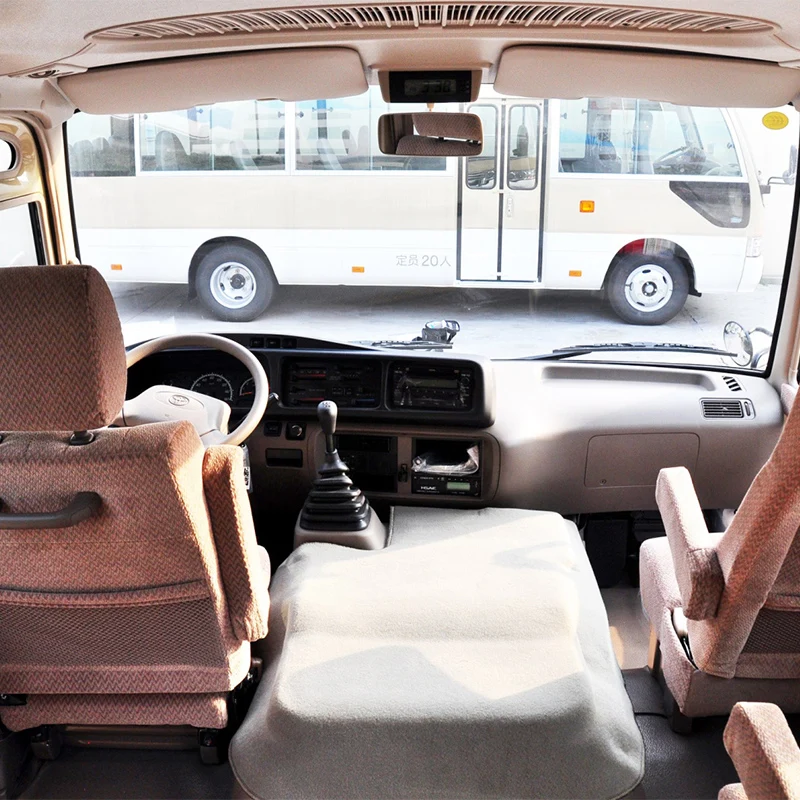
For many auto dealers, wholesalers, and importers, the first question is not how to move large volumes of inventory,
but whether they can start with a single unit. If you are asking, “Can dealers buy one used Toyota?”,
the short answer is yes in many cases, but the exact conditions depend on the supplier, market channel, order policy,
and the type of Toyota model being sourced. In the used vehicle business, the concepts of MOQ
(Minimum Order Quantity) and trial orders are especially important because they affect pricing,
trust building, logistics planning, and long-term supply stability.
This page provides a clear, SEO-friendly explanation of how used Toyota dealer buying works,
what MOQ means in the used car export and wholesale industry, why trial orders
matter, and how dealers can evaluate a single used Toyota order before scaling up. The information below
is industry-general and intended for blogs, directory pages, and category pages. It does not recommend any specific company.
MOQ stands for Minimum Order Quantity. In the used Toyota market, MOQ refers to the
smallest number of vehicles a seller, wholesaler, auction broker, or exporter is willing to release in one transaction.
Some suppliers set a MOQ because they want to optimize shipping costs, processing time, inspection workflow, and export
documentation. Others are flexible and allow dealers to buy one used Toyota as a trial or sample order.
MOQ is common in B2B trade because a supplier often handles procurement, inspection, reconditioning, paperwork,
inland transport, and port delivery. If the order volume is too low, the seller may find the transaction less efficient.
However, in competitive used car markets, one-unit orders are often accepted when the dealer is testing a supplier,
entering a new market, or sourcing a specific model with strong demand.
| Order Type | Typical MOQ Logic | Dealer Use Case |
|---|---|---|
| Single Unit Order | No fixed MOQ, or sample-based exception | Trial purchase, market testing, special customer request |
| Small Batch Order | 2-5 units | New dealer relationship, mixed model sourcing |
| Medium Batch Order | 6-20 units | Regular dealership replenishment, fleet resale |
| Bulk Order | 20+ units | Wholesale distribution, export programs, long-term supply contracts |
Yes, dealers can often buy one used Toyota, especially if the supplier supports trial orders or
sample purchasing. A single unit order is useful for dealers who want to check vehicle condition, documentation accuracy,
delivery quality, and after-sales responsiveness before making a larger commitment.
In practice, the ability to buy one used Toyota depends on several factors:
For many buyers, the key benefit of ordering one used Toyota is flexibility. Instead of committing to a full container
or multiple-unit shipment, the dealer can assess product quality, paperwork accuracy, and logistics performance with
lower risk.
A trial order is a small first order placed to evaluate the supplier and the product. In the used Toyota
sector, trial orders are extremely important because used vehicles vary in mileage, condition, trim level, repair history,
accident history, and regional specification. A dealer who places a trial order can inspect the actual buying experience
before scaling to a larger inventory program.
Trial orders are especially useful when:
| Benefit | How It Helps Dealers |
|---|---|
| Lower entry risk | Dealers can test the market without committing to a large inventory |
| Quality verification | Dealers can evaluate the actual used Toyota condition against the listing |
| Documentation check | Trial orders help verify title, export papers, and shipment documents |
| Logistics testing | Dealers can measure shipping timing, loading process, and arrival performance |
| Supplier evaluation | Dealers can judge communication, reliability, and response quality |
Toyota is one of the strongest names in the global used car market because of its reputation for durability, parts
availability, fuel efficiency, and resale value. For dealers, this matters because a used Toyota often has easier market
positioning than less recognizable brands. Buyers frequently search for Toyota models by name, which can support faster
turnover and stronger conversion rates.
In used vehicle trading, Toyota models are frequently requested for:
Dealers like used Toyota inventory because it often combines practical ownership cost with broad buyer appeal. That
makes one-unit trial orders especially attractive: even a single vehicle can provide strong feedback on market response.
Even when buying just one unit, dealers should use a structured evaluation process. A single used Toyota may appear
simple to source, but a proper check can prevent costly issues after import or resale. The following points are commonly
reviewed in professional sourcing workflows.
| Inspection Area | What to Check | Why It Matters |
|---|---|---|
| Exterior condition | Paint quality, dents, rust, glass, lights, body alignment | Impacts resale presentation and repair costs |
| Interior condition | Seats, dashboard, electronics, AC, odometer display | Influences customer perception and usability |
| Mechanical condition | Engine, transmission, suspension, brakes, steering | Determines reliability and warranty risk |
| Mileage | Recorded kilometers or miles | Helps assess wear level and pricing value |
| Documentation | Title, export papers, inspection sheets, invoice data | Ensures legal compliance and customs clearance |
| Model specification | Engine size, fuel type, transmission, trim level | Determines demand in the target market |
| Market fit | Local preference, spare parts availability, tax rules | Influences sales speed and profit margin |
MOQ and pricing are closely connected. In general, the smaller the order, the higher the per-unit cost can be. This
happens because fixed expenses such as inspection, handling, inland transport, and export documentation are spread over
fewer vehicles. As a result, buying one used Toyota may cost more per unit than buying a batch of 5 or 10 vehicles.
Still, a one-unit order can be the most cost-effective option when the dealer is testing a new supplier or entering a
new segment. The true value of a trial order is not just the purchase price. It also includes risk reduction, supplier
evaluation, and proof of market demand.
| Pricing Factor | Effect on One Unit Order |
|---|---|
| Vehicle age | Older units may be cheaper, but may need more reconditioning |
| Mileage | Lower mileage often raises price |
| Model popularity | High-demand models often carry stronger pricing |
| Condition rating | Better condition usually means higher purchase price |
| Shipping method | RoRo or container shipping affects total landed cost |
| Order volume | Single unit orders often have less volume discount |
| Destination market | Taxes, duty, and port charges vary by country |
A trial order usually follows a simple workflow. While exact steps vary by supplier and country, the overall process
often looks like this:
A one-unit used Toyota order can provide several strategic advantages. It is not only a smaller purchase; it is often
a smart business test. Dealers use trial orders to protect cash flow and learn how a supplier performs in real business
conditions.
While trial orders are useful, they also have limitations. Dealers should understand the trade-offs before deciding to
buy one used Toyota instead of placing a larger order.
Even with these limitations, many dealers still prefer a trial order first, because minimizing risk can be more valuable
than chasing the lowest possible unit cost.
Dealers commonly seek Toyota models with broad demand, manageable maintenance costs, and strong resale potential. The
exact preferred models vary by country, but several types are frequently discussed in used vehicle sourcing.
| Model Category | Typical Dealer Appeal | Common Buyer Demand |
|---|---|---|
| Compact sedan | Affordable, fuel-efficient, easy to resell | Urban commuters, first-time buyers |
| Mid-size sedan | Comfortable, practical, widely recognized | Families, professional users |
| Hatchback | Compact and economical | City drivers, budget buyers |
| SUV | Higher perceived value and stronger versatility | Families, road-trip users, premium market |
| Pickup | Utility, durability, commercial appeal | Business buyers, fleet users |
When sourcing one used Toyota or a trial batch, dealers often request specific technical and commercial details. Clear
specifications improve comparison, reduce misunderstandings, and help buyers estimate landed cost and resale value.
| Specification | Common Dealer Requirement |
|---|---|
| Make | Toyota |
| Vehicle type | Passenger car, SUV, pickup, hatchback, van |
| Condition | Used, inspected, roadworthy depending on market rules |
| Year range | Often based on import policy or buyer preference |
| Mileage | Target range depending on pricing strategy |
| Transmission | Automatic or manual |
| Fuel type | Petrol, diesel, hybrid depending on market demand |
| Drive type | 2WD or 4WD |
| Color | Common resale-friendly colors often preferred |
| Documentation | Export paperwork, inspection report, invoice, title status |
A trial order makes sense when the dealer needs evidence before scaling. If the market is uncertain, if the supplier is
new, or if the Toyota model is being tested in a fresh region, a one-unit order can provide practical data. Dealers
should think about profit potential, market timing, and logistics complexity before making the decision.
A useful decision framework includes the following questions:
If the answer to most of these questions is yes, a one used Toyota trial order can be a practical entry point.
Dealers often encounter trade terms, especially in export sourcing. Understanding these terms helps avoid confusion and
supports better planning.
| Term | Meaning |
|---|---|
| MOQ | Minimum number of units required for an order |
| Trial order | Small first order used to test supplier quality and demand |
| Wholesale price | Dealer-level price before retail markup |
| Landed cost | Total cost including purchase, freight, duty, and local handling |
| Inspection report | Vehicle condition summary provided before purchase |
| VIN | Vehicle Identification Number used for tracking and verification |
| RoRo | Roll-on/Roll-off shipping method for vehicles |
| Container shipping | Transport method where the vehicle is loaded into a shipping container |
If this content is used on a blog, category page, or industry landing page, the following keyword themes can help
support search relevance. These phrases are naturally aligned with dealer intent and used Toyota sourcing queries.
Yes, many dealers can buy one used Toyota, especially when the supplier accepts trial orders or has no strict MOQ.
The main benefit is risk control. Dealers can test product quality, supplier reliability, and market demand before
making a larger purchase.
Usually the per-unit cost can be higher than a bulk order because fixed handling and shipping expenses are spread across
only one vehicle.
MOQ means Minimum Order Quantity, or the smallest number of vehicles a seller is willing to accept in one order.
Trial orders help both sides build trust. The buyer tests the product and process, while the seller gains a chance to
prove service quality.
In the used vehicle trade, can dealers buy one used Toyota is a practical question with a flexible answer:
often yes, especially when a trial order is the best way to start. Understanding MOQ and trial orders
gives dealers a stronger position when negotiating, planning logistics, and evaluating supplier performance. A single used
Toyota order can be a smart business move when the dealer wants to test demand, verify quality, and reduce risk before
scaling.
Whether you are building a dealership inventory plan, writing an industry page, or creating SEO content around
used Toyota wholesale, single unit used car orders, and dealer MOQ,
the key ideas remain the same: start with clear specifications, review documentation carefully, and use trial orders
as a structured path to long-term supply confidence.
```
This website uses cookies to ensure you get the best experience on our website.



 Phone
Phone
Comment
(0)