

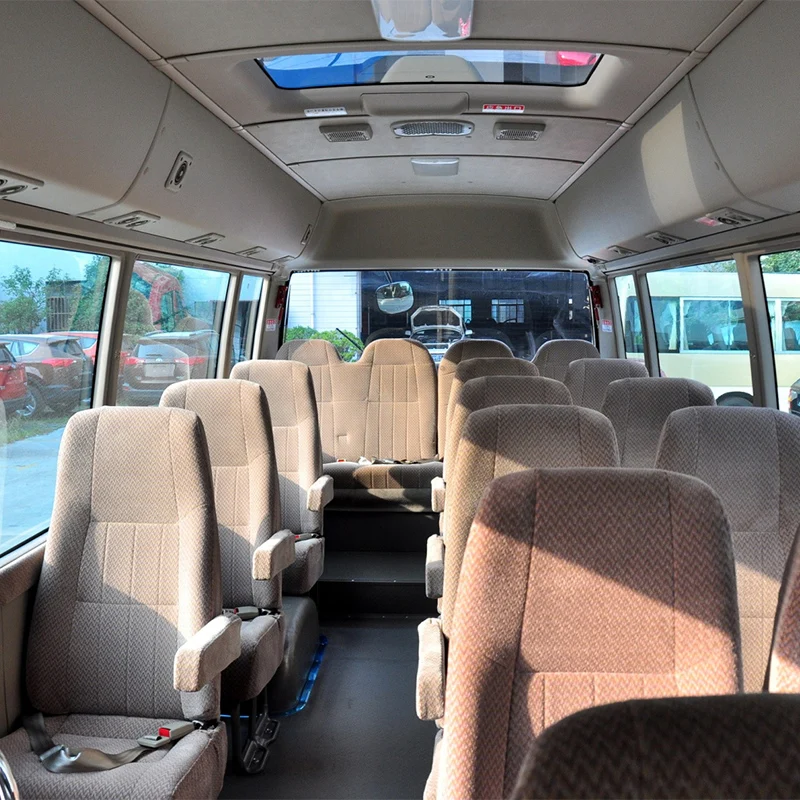
If you are looking for used Toyota cars for Chile and Peru, you are entering one of the most active and practical segments of the Latin American used vehicle market. Toyota remains a top choice for importers, dealers, fleet buyers, and resellers because of its reputation for reliability, strong resale value, low maintenance needs, and wide parts availability. For buyers serving Chile and Peru, Toyota used vehicles are especially attractive due to their suitability for urban driving, highway travel, commercial use, and long-term ownership.
This guide is designed for importers, wholesalers, marketplace operators, and automotive content publishers who want a clear, SEO-friendly overview of the market. It covers key definitions, buyer considerations, vehicle types, documentation, inspection points, shipping considerations, and model categories commonly requested in Chile and Peru. The content is general and industry-focused, with no specific company recommendations.
Toyota has a strong position in the used car market across South America because it matches the practical needs of regional buyers. In Chile and Peru, import demand often centers on vehicles that are durable, fuel-efficient, easy to repair, and suitable for mixed road conditions. Used Toyota cars are often preferred for these exact reasons.
From a commercial standpoint, Toyota models are easy to market because buyers already recognize the brand. This reduces sales friction for importers and distributors. Whether the target customer is a family buyer, a ride-hailing driver, a small business owner, or a fleet operator, Toyota usually performs well in terms of trust and value retention.
Importers serving Chile and Peru should understand that the ideal vehicle mix depends on local demand, road conditions, fuel prices, and buyer budgets. In general, Chile tends to have strong demand for practical passenger cars, SUVs, and work vehicles. Peru also shows high demand for durable, fuel-conscious models, especially vehicles that can handle city traffic and extended daily use.
Used Toyota cars appeal to both retail buyers and commercial buyers. Retail demand usually focuses on compact sedans, hatchbacks, and SUVs, while business demand often centers on pickups, vans, and commercial-duty wagons. For importers, selecting the right model mix can improve inventory turnover and minimize holding costs.
| Buyer Priority | Why It Matters | Toyota Advantage |
|---|---|---|
| Reliability | Reduces repair frequency and ownership risk | Long-lasting engines and proven platforms |
| Fuel Economy | Helps lower daily operating costs | Efficient small cars, hybrids, and modern gasoline engines |
| Resale Value | Supports strong future trade-in and resale pricing | Toyota models often hold market value well |
| Maintenance Simplicity | Important for service affordability and uptime | Widely known mechanics and parts support |
| Road Suitability | Vehicles must work in urban and regional conditions | SUVs, pickups, and durable sedans perform well |
A used Toyota import is a pre-owned Toyota vehicle sourced from a market outside the destination country and brought into Chile or Peru for resale, fleet use, or private ownership. These vehicles may come from Japan, the United States, Europe, or other export markets, depending on sourcing strategy, compliance rules, and buyer demand.
In import trade, “used” can refer to vehicles with varying mileage, age, and condition. Some units are lightly used and nearly new, while others are older models selected for affordability and utility. For SEO and catalog purposes, importers often segment inventory by model year, mileage, body type, transmission, engine size, and condition grade.
| Category | Description | Typical Buyer Type |
|---|---|---|
| Low-mileage used | Recent model year with limited wear | Retail buyers seeking near-new condition |
| Mid-mileage used | Balanced age and pricing, common import category | Dealers, families, and ride-share buyers |
| Budget used | Older vehicle with lower acquisition cost | Price-sensitive buyers and secondary markets |
| Commercial used | Work-oriented vehicles such as pickups and vans | Businesses, logistics firms, and fleets |
Not all used Toyota models perform equally well in every market. Importers should focus on body styles that match local demand and road conditions. The following Toyota vehicle types are commonly relevant to Chile and Peru.
Sedans remain one of the most widely requested used car categories. They are practical, comfortable, easy to park, and generally fuel-efficient. Toyota sedans are often selected by urban drivers, professionals, and families seeking a balanced ownership experience.
Hatchbacks offer compact dimensions and efficient fuel usage. They are especially useful in dense city environments where parking space and maneuverability matter. For importer catalogs, hatchbacks are often positioned as affordable, efficient daily drivers.
Used Toyota SUVs are highly attractive for buyers who want stronger road presence, greater cabin space, and improved versatility. SUVs often appeal to families, outdoor users, and buyers in regions with variable road surfaces.
Toyota pickups are important in commercial and utility-oriented demand segments. They are frequently chosen for business use, agricultural work, construction support, and rugged transport tasks. Their strong chassis and reliability make them a core product category.
For larger families, shuttle services, and commercial passenger transport, Toyota minivans and MPVs can be highly attractive. They offer flexible seating, cargo capacity, and dependable operation.
Hybrid Toyota vehicles are increasingly relevant where buyers want lower fuel consumption and lower emissions. In cities with heavy traffic, hybrids can be a major selling point, especially for professional drivers and environmentally conscious consumers.
When importing used Toyota cars for Chile and Peru, buyers typically compare a core set of specifications. These specs influence price, performance, marketability, and total ownership cost. For SEO purposes, these fields are also useful for product page structure and category filtering.
| Specification | Why It Matters | Common Buyer Preference |
|---|---|---|
| Model year | Affects age, technology, and resale value | Newer years often sell faster |
| Mileage | Indicates usage level and likely wear | Lower mileage is usually preferred |
| Engine size | Impacts fuel economy and performance | Small to mid-size engines are popular |
| Transmission | Affects driving comfort and target audience | Automatic is often preferred in cities |
| Fuel type | Determines running cost and emissions profile | Gasoline and hybrid are common choices |
| Drive type | Influences road handling and utility | 2WD for efficiency, 4WD for tougher use |
| Body style | Defines vehicle purpose and customer fit | Sedan, SUV, pickup, and van |
| Condition grade | Supports pricing and inspection decisions | Higher grade vehicles command stronger interest |
A successful import strategy depends on careful vehicle evaluation. The most profitable used Toyota inventory is usually sourced after a structured inspection of condition, specification, and market fit. Importers should avoid buying only on appearance or brand reputation. Instead, each vehicle should be reviewed through a practical commercial lens.
Maintenance records help indicate whether the vehicle was cared for properly. Regular oil changes, brake servicing, and documented repairs are positive signals. A complete history supports buyer confidence and can improve resale potential.
Look for signs of collision damage, structural repair, corrosion, or uneven panel gaps. Even if the vehicle is mechanically sound, poor body condition can reduce value and slow sales.
Engine health and transmission behavior are essential. Smooth starting, stable idle, clean acceleration, and proper gear changes are key indicators. Any abnormal smoke, noise, vibration, or slipping should be noted before purchase.
Mileage should be consistent with the vehicle’s age and overall condition. Excess wear on seats, pedals, steering wheels, and suspension parts may suggest heavy use. Importers should look for signs of wear that are not reflected in the odometer reading.
Trim level can significantly affect market value. Features such as safety systems, infotainment, alloy wheels, climate control, and power accessories help determine buyer appeal. Original equipment is often more valuable than aftermarket modification.
Vehicles with broad parts availability are easier to service and sell. Toyota’s popular models often benefit from strong aftermarket support, which is a major advantage for importers and owners alike.
The exact popularity of Toyota models changes by market cycle, supply availability, and buyer preference. However, several Toyota model families are frequently relevant in used car export and import trade because they offer a balance of durability, efficiency, and value.
| Model Family | Common Appeal | Typical Use Case |
|---|---|---|
| Corolla | Reliable, efficient, broad market recognition | Daily commuting, family use, resale-focused retail |
| Yaris | Compact, economical, city-friendly | Urban driving, first-time buyers, fleet use |
| RAV4 | SUV practicality, strong family appeal | Family transport, mixed road conditions |
| Hilux | Durability, utility, commercial strength | Business use, field work, transport operations |
| Prado | Higher-end SUV positioning, comfort, capability | Premium family use, long-distance travel |
| Hiace | Passenger and cargo versatility | Shuttle services, logistics, commercial transport |
| Avanza | Practical MPV with good capacity | Family transport, small business use |
One of the strongest selling points of used Toyota cars is operating efficiency. In Chile and Peru, buyers often pay close attention to fuel consumption because it has a major effect on monthly expenses. Importers should therefore highlight economy-focused features in descriptions, filter pages, and catalog listings.
Smaller-engine Toyota sedans and hatchbacks typically attract budget-conscious drivers, while hybrid models appeal to buyers who prioritize lower fuel use in urban traffic. SUVs and pickups usually consume more fuel, but their utility can justify the added operating cost. A good importer understands how to position each model according to expected ownership economics.
For many buyers, transmission type is a major deciding factor. Automatic transmissions are often preferred in urban areas because they reduce driver fatigue in traffic. Manual transmissions can still be attractive for budget-conscious buyers or those who value lower purchase prices and direct control.
Engine size also matters. Small displacement engines usually support lower fuel costs and are ideal for city use. Larger engines or diesel configurations may be preferred for towing, commercial transport, or long-distance travel, depending on local supply and regulations. Drivetrain choice should match the use case: front-wheel drive for efficiency, rear-wheel drive or four-wheel drive for heavier-duty applications.
| Feature | Buyer Benefit | Best Fit |
|---|---|---|
| Automatic transmission | Easier driving in traffic | Urban commuting, family use |
| Manual transmission | Often lower purchase cost | Budget buyers, experienced drivers |
| Small engine | Better fuel economy | City use, taxi-like operation, daily commuting |
| Larger engine | More power and load capability | SUVs, pickups, long-distance use |
| 4WD / AWD | Improved traction and confidence | Mixed terrain, utility, rural routes |
Imported used vehicles must be handled with proper documentation. While exact import rules differ by country and may change over time, the general document set typically includes vehicle ownership or export paperwork, inspection documents, shipping records, and customs clearance materials.
Importers should always verify current local regulations before shipment. Compliance risk can affect cost, timing, and final marketability. This is especially important when sourcing used Toyota cars for Chile and Peru, where buyers expect clean paperwork and legally importable units.
Documentation quality is a major trust factor. Clear, accurate paperwork helps reduce disputes and supports a smoother transfer from importer to end buyer.
Logistics are a key part of the import process. The total landed cost of a used Toyota is not only the vehicle purchase price, but also freight, insurance, handling, customs procedures, inland transport, and administrative costs. Smart importers analyze these expenses before buying inventory.
Container shipping and roll-on/roll-off transport are common vehicle shipping methods. The best option depends on vehicle type, shipment size, risk tolerance, and budget. For higher-value or carefully protected units, container shipping may provide additional security. For larger volume shipments, other methods may be more cost-efficient.
| Logistics Factor | Impact on Import Business | Why It Matters |
|---|---|---|
| Freight cost | Affects total landed price | Can change profit margin significantly |
| Shipping time | Influences inventory turnover | Longer transit can delay sales |
| Damage risk | Impacts vehicle condition on arrival | Protection method matters |
| Port handling | Can create extra fees or delays | Must be included in cost planning |
| Inland transport | Final delivery cost to warehouse or lot | Often overlooked in pricing calculations |
For blog articles, category pages, and directory listings, SEO structure matters. Pages targeting “used Toyota cars for Chile and Peru” should use clear headings, relevant keyword variations, and practical user-focused content. Search engines favor pages that answer common buyer questions and include structured information.
Useful keyword variations include: used Toyota cars, Toyota used car importer, Toyota cars for Chile, Toyota cars for Peru, used Japanese cars, Toyota sedan import, Toyota SUV import, Toyota pickup export, and pre-owned Toyota vehicles. These terms should appear naturally in headings, descriptions, and supporting text without keyword stuffing.
A strong SEO page should help both buyers and search engines understand what the page is about. Content that explains vehicle types, import steps, and key specs tends to perform well because it satisfies informational intent.
Used Toyota vehicles offer several practical advantages that make them highly suitable for the Chile and Peru import market. These benefits are important for marketing copy, lead generation, and product positioning.
| Benefit | Explanation | Commercial Value |
|---|---|---|
| Trusted brand image | Toyota is well known and widely respected | Improves buyer confidence |
| Lower repair risk | Many models are built for long-term use | Reduces after-sales complaints |
| Good parts network | Replacement components are often easy to source | Supports long-term ownership |
| Broad model range | Different body types fit different market segments | Allows inventory diversification |
| Strong resale value | Used Toyotas often remain desirable | Helps preserve asset value |
Importers should approach the Toyota used car market strategically. It is not enough to source popular models; the vehicles must also be priced correctly, documented properly, and aligned with local demand. The most successful operations usually combine market knowledge, consistent inspection standards, and a clear inventory strategy.
For Chile and Peru, the most effective product pages are those that clearly explain why a specific Toyota model is attractive in the local market. Buyers respond well to practical value arguments, especially when those arguments are supported by specs and condition details.
Used Toyota cars for Chile and Peru continue to be a strong import category because they combine brand trust, dependable engineering, broad model variety, and strong market demand. For importers, this creates a favorable environment for both turnover and long-term customer satisfaction. Whether the goal is to serve retail buyers, commercial users, or fleet accounts, Toyota offers options that fit multiple segments.
From an SEO and publishing perspective, this topic is highly valuable because it matches real buyer intent. Pages built around used Toyota cars, import guidance, model comparisons, and market-specific advice can attract qualified traffic and support conversion. By using structured headings, tables, and naturally placed keywords, this content can be inserted directly into an HTML page and adapted for blogs, directory pages, and industry landing pages.
For any importer or publisher targeting South American used car demand, Toyota remains one of the most relevant and commercially stable brands to feature.
| Topic | Summary |
|---|---|
| Market demand | Strong demand driven by reliability, value, and parts support |
| Best body styles | Sedans, hatchbacks, SUVs, pickups, vans, and hybrids |
| Key specs | Model year, mileage, engine size, transmission, fuel type, drive type |
| Top buyer benefits | Fuel economy, resale value, durability, and low maintenance cost |
| Importer focus | Inspection, documentation, landed cost, and market-fit selection |
| SEO value | High search intent for importers, dealers, and vehicle buyers |
This website uses cookies to ensure you get the best experience on our website.



 Phone
Comment
(0)