

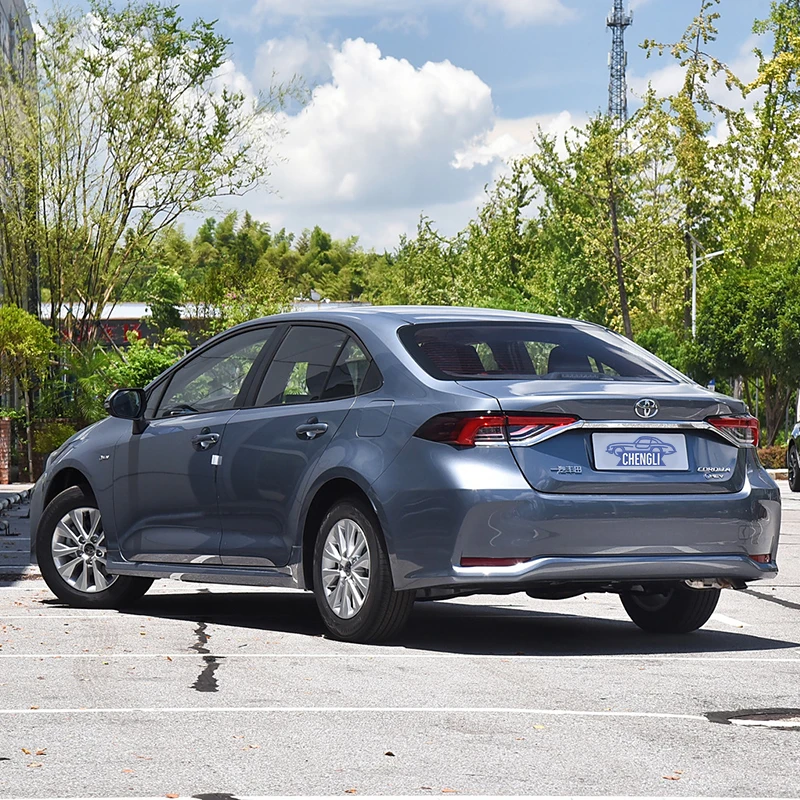
The used Toyota Corolla Cross has become a highly searched export vehicle in many international markets because it combines compact SUV practicality, Toyota reliability, strong resale value, and broad buyer appeal. For exporters, dealers, importers, and used car buyers, one of the most important decisions is choosing between the gasoline Corolla Cross and the hybrid Corolla Cross. Both versions offer strong market demand, but they differ in fuel economy, maintenance profile, driving behavior, price point, and import suitability.
This guide provides a detailed, SEO-friendly overview of the Toyota Corolla Cross gasoline vs hybrid export market, including definitions, advantages, disadvantages, technical considerations, common specifications, buyer profiles, and export-oriented comparison tables. The content is written for general industry use and can be inserted directly into a blog post, directory page, landing page, or automotive industry content page.
The Toyota Corolla Cross is a compact crossover SUV positioned between a sedan and a full-size SUV. Built on Toyota’s proven platform strategy, it uses Corolla branding to communicate reliability, affordability, and mass-market appeal. The Corolla Cross is designed for urban commuting, family use, light cargo transport, and export markets where compact SUVs are in high demand.
As a used export vehicle, the Corolla Cross is attractive because it is:
For importers, the Corolla Cross is often considered a low-risk inventory choice because demand is broad across Africa, Asia, the Middle East, Latin America, and island markets. Buyers often compare gasoline and hybrid versions based on budget, fuel economy, maintenance expectations, and local fuel prices.
The export appeal of the used Toyota Corolla Cross comes from its balance of size, efficiency, and brand strength. Unlike many niche SUVs, it suits both private buyers and commercial resale channels. It is often chosen for its practical interior, elevated seating position, and relatively low ownership cost compared with larger SUVs.
Key export advantages include:
| Export Advantage | Why It Matters |
|---|---|
| Global brand recognition | Toyota is trusted in many import markets, helping resale and marketing. |
| Compact SUV demand | Crossovers are one of the fastest-growing used vehicle segments worldwide. |
| Fuel efficiency | Gasoline and hybrid versions both appeal to cost-conscious buyers. |
| Parts availability | Common Toyota components are easier to source than rare-brand alternatives. |
| Practical cabin space | The interior layout supports family use, rideshare use, and business transport. |
| Flexible buyer market | Suitable for first-time SUV buyers, urban users, and fleet customers. |
Before comparing export value, it is useful to define the two powertrain types clearly.
The gasoline Corolla Cross uses a conventional internal combustion engine powered by petrol. It is generally simpler in design than a hybrid version and typically has a lower purchase price. The gasoline variant is often preferred in markets where fuel prices are moderate, mechanical simplicity is valued, or hybrid service infrastructure is limited.
The hybrid Corolla Cross combines a gasoline engine with one or more electric motors and a battery system. The system is designed to improve fuel economy, reduce emissions, and enhance low-speed driving efficiency. Hybrid models often appeal to buyers who drive frequently in city traffic or prioritize long-term fuel savings.
For export buyers, the choice between gasoline and hybrid is not only about engine type. It also affects pricing strategy, market positioning, maintenance expectations, and after-sales support. In many countries, the same model may perform differently depending on fuel cost, repair capability, and buyer awareness.
| Feature | Gasoline Corolla Cross | Hybrid Corolla Cross |
|---|---|---|
| Purchase price | Usually lower | Usually higher |
| Fuel economy | Good | Excellent |
| Maintenance complexity | Simpler | More advanced |
| Driving feel | Traditional and familiar | Smoother in stop-and-go traffic |
| Best market type | Price-sensitive, low-tech support markets | Fuel-sensitive, urban, eco-conscious markets |
| Resale positioning | Broad, affordable | Premium efficiency, modern appeal |
| Battery system | No hybrid battery | Includes hybrid battery and control system |
The gasoline Corolla Cross remains one of the most practical export options for many regions. Its main advantage is simplicity. Fewer complex components can mean easier repairs, lower diagnostic requirements, and a wider base of mechanics who can service it.
Used gasoline Corolla Cross units generally have a lower purchase price than hybrid units. This makes them attractive for budget buyers, dealers seeking lower entry cost inventory, and markets with weaker purchasing power.
The gasoline engine typically requires routine maintenance that is familiar to most workshops. Oil changes, filters, spark plugs, belts, and standard drivetrain service are usually easier to manage than hybrid-related repairs.
In many export destinations, buyers are more comfortable with a conventional gasoline vehicle. The driving experience is familiar, and the technology is widely understood.
Where hybrid-certified technicians or battery diagnostic tools are limited, gasoline models can be a safer choice for importers. This reduces buyer hesitation and may improve resale speed.
For buyers who do not drive excessive yearly distances, the fuel savings of a hybrid may not justify the higher upfront price. In these cases, the gasoline model can offer better value.
The hybrid Corolla Cross is often the preferred option in markets where fuel cost is high and buyers want modern efficiency. Hybrid technology is one of the strongest selling points in global used car export, especially for compact SUVs.
The most important benefit of the hybrid Corolla Cross is improved fuel efficiency. This can be especially valuable in urban traffic, where the electric motor can assist during low-speed movement and stop-start conditions.
Although the hybrid may cost more initially, the reduced fuel usage can create long-term savings. For frequent drivers, taxi operators, and fleet buyers, these savings can be significant.
Hybrid vehicles are increasingly viewed as premium, smart, and future-ready. This can help the Corolla Cross Hybrid stand out in a competitive used SUV market.
Hybrid systems are particularly effective in congested urban areas where frequent braking and acceleration occur. This makes them ideal for city commuters and delivery-style use in some markets.
In some regions, hybrid vehicles benefit from a cleaner image and may be more attractive to eco-conscious consumers, corporate buyers, or urban families looking for a modern crossover.
Both gasoline and hybrid Corolla Cross models have strengths, but each also has limitations. Export buyers should evaluate the full ownership picture, not just the selling price.
The exact specifications of a used Toyota Corolla Cross vary by year, grade, market, and drivetrain. However, export buyers usually evaluate key categories such as engine size, transmission type, fuel tank capacity, seating capacity, and safety equipment.
| Specification Category | Typical Gasoline Model | Typical Hybrid Model |
|---|---|---|
| Engine type | Petrol internal combustion engine | Petrol engine + electric motor system |
| Transmission | CVT or automatic, depending on market | E-CVT or hybrid automatic system |
| Fuel type | Gasoline / petrol | Gasoline + electric power assistance |
| Drive layout | Often 2WD, sometimes AWD | Often 2WD, some markets offer AWD hybrid |
| Seating | 5 seats | 5 seats |
| Body type | Compact SUV / crossover | Compact SUV / crossover |
| Fuel economy | Good | Very good / excellent |
| Maintenance style | Conventional | Conventional + hybrid system checks |
The gasoline Toyota Corolla Cross is usually a stronger fit for buyers who value simplicity and lower acquisition costs. It is often the right choice for importers serving broad mainstream retail markets.
Gasoline models are often suitable for:
The hybrid Toyota Corolla Cross is ideal for buyers who want lower fuel consumption and are willing to pay more upfront. It is especially attractive in dense cities and regions with high fuel prices.
Hybrid models are often suitable for:
Fuel economy is one of the biggest reasons buyers compare gasoline and hybrid Corolla Cross models. In export markets, fuel cost can dramatically influence resale value and long-term demand.
The gasoline Corolla Cross typically offers respectable fuel consumption for a compact SUV, but the hybrid version usually delivers noticeably better efficiency, especially in city traffic. Over time, the savings can offset part of the higher purchase price.
| Cost Factor | Gasoline Model | Hybrid Model |
|---|---|---|
| Purchase price | Lower | Higher |
| Fuel cost | Moderate | Lower |
| Routine maintenance | Usually lower complexity | May be higher complexity |
| Long-term operating cost | Depends on fuel price and mileage | Often lower for high-mileage users |
| Best use case | Lower budget, simpler servicing | Heavy city use, high fuel cost markets |
Reliability is one of the strongest selling points for Toyota vehicles. However, buyers should still distinguish between general Toyota durability and the specific support needs of a hybrid system.
Gasoline Corolla Cross models generally rely on standard maintenance items. Most service centers can handle engine oil changes, air filters, brake service, tires, fluids, and basic mechanical inspections. This is especially helpful in export destinations with diverse workshop standards.
Hybrid Corolla Cross models also benefit from Toyota’s engineering reputation, but their battery system, inverter, electric motors, and related electronics may require more specialized knowledge. This does not necessarily mean the hybrid is unreliable, but it does mean buyers should consider local service readiness.
Both gasoline and hybrid Corolla Cross models can retain strong export value, but demand patterns differ by destination.
Gasoline models usually have broader acceptance in traditional used car markets, especially where customers seek affordability and simple ownership. Hybrid models often command stronger interest in major cities, high-fuel-price regions, and countries where fuel-efficient vehicles are fashionable or strongly promoted.
In practical terms:
Choosing between gasoline and hybrid for export depends heavily on destination-specific market conditions. The same vehicle can perform differently depending on local regulations, fuel prices, and buyer awareness.
| Market Factor | Impact on Gasoline | Impact on Hybrid |
|---|---|---|
| Fuel price | Less sensitive | More attractive when fuel is expensive |
| Workshop capability | Widely supported | Needs more advanced support |
| Buyer awareness | Easy to explain | May require education on benefits |
| Customs/import taxes | Depends on engine size and model year | May benefit from efficiency-oriented policies in some regions |
| Urban congestion | Works well | Often more efficient in stop-start driving |
When sourcing a used Toyota Corolla Cross for export, buyers often review common features that affect value and marketability. These features may vary by trim and production year.
Higher equipment levels generally improve export value. However, market demand may still prioritize durability and price over luxury features.
There is no single universal answer. The better export choice depends on the destination market, customer profile, fuel prices, and service infrastructure.
Choose gasoline if the market values lower pricing, simple maintenance, and familiar ownership. Gasoline Corolla Cross models are often the safer mass-market choice for broad retail demand.
Choose hybrid if the market values fuel efficiency, urban driving performance, and modern technology. Hybrid Corolla Cross units can be especially strong in cities and high fuel cost regions.
The used Toyota Corolla Cross gasoline vs hybrid for export comparison is an important topic for used car traders, importers, and buyers. The gasoline model offers simplicity, lower upfront cost, and easy servicing, while the hybrid model delivers better fuel economy, modern appeal, and lower operating costs over time. Both versions are strong export products, and both can perform well in the international used car market when matched to the right destination and buyer type.
If your audience is searching for used Toyota Corolla Cross export, Corolla Cross gasoline vs hybrid, Toyota Corolla Cross hybrid for sale, or used compact SUV export guide, this content provides a structured, keyword-rich foundation for ranking-oriented automotive pages.
| Use Case | Better Choice | Reason |
|---|---|---|
| Budget retail export | Gasoline | Lower purchase price and broad market appeal |
| High fuel cost city market | Hybrid | Better fuel economy and lower running cost |
| Simple workshop support | Gasoline | More conventional servicing |
| Long daily commute | Hybrid | Efficiency improves with high mileage |
| Fast resale in traditional markets | Gasoline | Easier acceptance in lower-tech service environments |
| Eco-friendly positioning | Hybrid | Modern efficiency story supports premium marketing |
In short, the used Toyota Corolla Cross remains one of the most adaptable export SUVs in today’s market. Whether gasoline or hybrid, it offers the core Toyota strengths that international buyers want: reliability, practicality, efficiency, and strong resale confidence.
This website uses cookies to ensure you get the best experience on our website.



 Phone
Phone
Comment
(0)